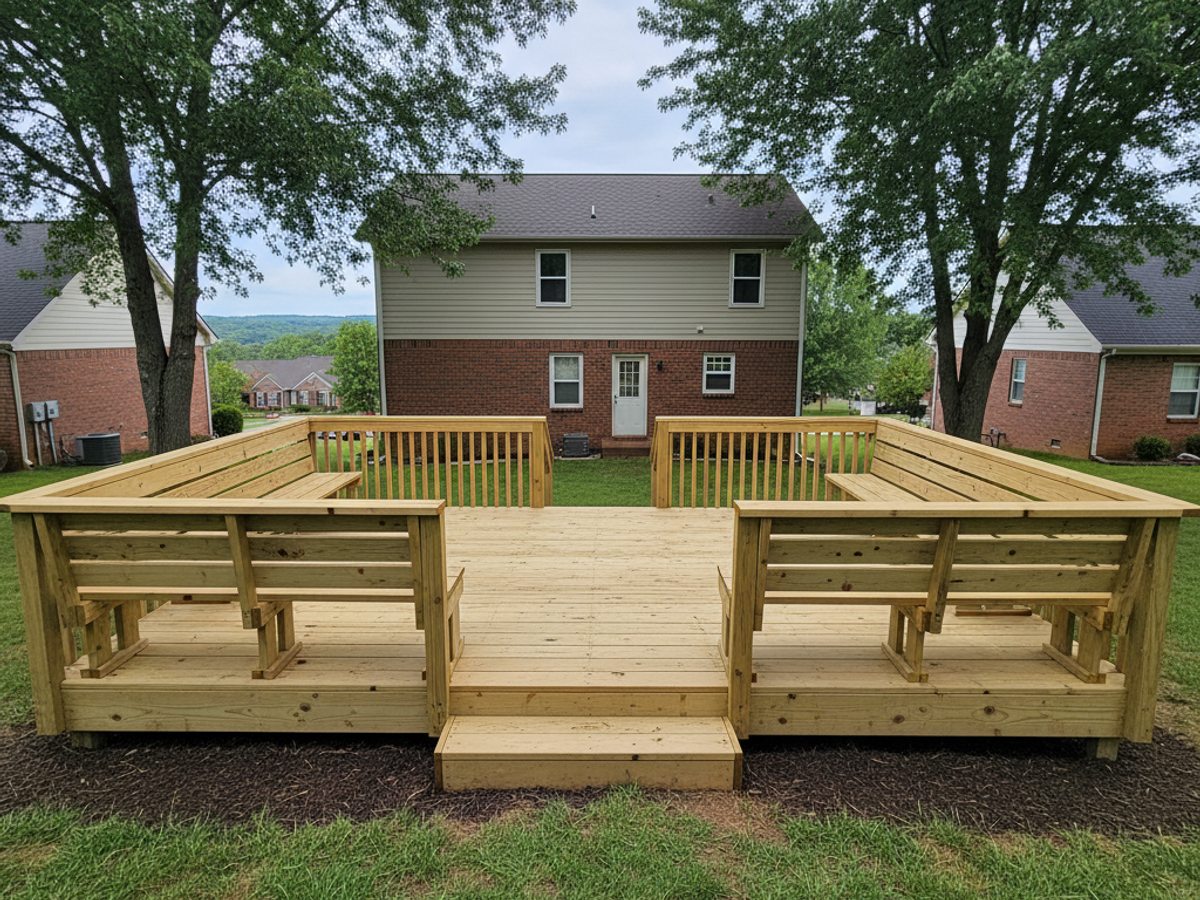
Memphis has a lot of deck builders. Some have been running crews for years, some picked up a Skilsaw and a Facebook page last spring. Telling them apart before you sign a contract is the hard part, and it matters more here than in a lot of places because of what our soil and weather do to outdoor wood structures over time.
Start with the footings, not the decking
Ask any builder how deep they're digging the footings before you ask them anything about board color or railing style. Shelby County ground is mostly silty topsoil over a clay subsoil that holds water poorly and moves as it wets and dries. That clay swells in a wet March and shrinks hard in a dry August, and a footing that's too shallow will heave over a couple of seasons. You'll notice it as a post that's suddenly a half inch proud of where it used to sit, or a deck surface that's gone slightly out of level along one side. Most residential deck footings around here go down close to 18 inches, deeper than our frost line technically requires, because the clay movement matters more than frost does. If a builder tells you 8 inches and a bag of concrete mix is fine, ask why. There may be a good answer. There often isn't.
Find out who's actually pulling the permit
A deck attached to the house, or one more than roughly 30 inches off grade, needs a permit through the city or the county building department depending on where the lot sits. Both Memphis and unincorporated Shelby County inspect the footings before they're covered up and the ledger connection before decking goes down. A builder who says permits are usually not worth the hassle is telling you, without meaning to, that they don't want an inspector looking at their ledger bolts. That connection is the single most common failure point on a deck. Nail it to the rim joist instead of lag-bolting or through-bolting it, skip the flashing behind it, and water gets into the rim joist for years before anyone notices. The first sign is usually the whole deck dropping a few inches on one side, all at once, often with people standing on it.
Know what the wood and the weather here are going to do to each other
Memphis summers run hot and humid from June through August, with plenty of afternoons where the heat index sits past 100. Pressure treated pine, still the most common decking and framing material around here, moves a lot with that humidity. It shrinks as it dries and swells as it takes on moisture again. A crew that spaces boards tight on a humid morning in July will hand you gaps wide enough to lose a phone through by October. Composite decking sidesteps most of that movement, but it has its own rule: it needs airflow underneath. A composite deck built low to the ground with no ventilation under the joists turns into a mildew problem by the following spring. If you're having a deck stained or sealed, ask how long the wood needs to dry out first. A film-forming stain applied on pressure treated lumber that hasn't dried for a full season will bubble and peel within a year, and that's a callback nobody wants to make twice.
Ask about grading and where the water actually goes
A lot of Memphis lots, especially older ones in Midtown, Cooper-Young and parts of East Memphis, were graded decades ago and don't drain the way a modern lot would. Hard, fast thunderstorms are normal here most months of the year, and a few real flash flood events show up most summers. A deck built without a plan for that water turns the crawlspace underneath it into standing water for a day or two after every storm, which rots joists from the underside where nobody's looking. Ask how the builder is handling drainage around the footings and under the framing, not just how the finished deck is going to look from the yard.
Ask to see a deck they built a few years ago, not just one they finished last month
Anyone can show you glossy photos of a deck that's two weeks old. Ask to see one from three or four years back, or drive by it if they'll give you an address. Look at whether the boards have cupped, whether the railing posts have any wobble, whether the stain has held up on the south-facing side that takes the most sun. That tells you more about a builder's actual work than any quote will.
What separates a real crew from a truck and a website
- They carry general liability insurance and worker's comp, and they'll hand you the certificate without you having to ask twice.
- They pull the permit themselves, or walk you through pulling it, instead of telling you it's optional.
- They give you a written contract that spells out footing depth, ledger fastener type, joist spacing, and decking material, not just a total price at the bottom.
- They can tell you, without checking a script, how many footings your deck needs based on its span and joist size.
- They ask for a reasonable deposit, not the full balance before a single hole is dug.
What to walk away from
Walk away from a bid that's a lot lower than everyone else's with no explanation. That usually means undersized footings, no permit, or lumber that isn't rated for ground contact where it needs to be. Walk away from anyone who won't put the ledger fastening method in writing. Walk away from a contract with no completion date and nothing said about who eats the cost of a rained-out concrete pour. And if the house sits in one of the newer subdivisions out toward Collierville, Germantown or Cordova with an HOA, ask whether the builder has worked with that HOA's setback and material rules before. A deck built two feet inside a required setback comes down at your expense, not theirs.
None of this is complicated once you know to ask it. Most of it isn't visible once the deck is stained and the furniture's out on it, which is exactly why the questions matter before the first footing gets dug. We've dealt with enough Memphis clay, summer humidity and bad grading to know where the shortcuts usually get taken, and All Things Deck Company is glad to walk through footing depth, ledger attachment or permit questions with you before you hire anyone, us included.